Secured vs Unsecured Business Loans in Australia: How to Choose
Secured vs unsecured business loans in Australia: compare collateral, cost, speed, borrowing limits and default risk, plus a checklist to help you choose.

Dean Morley
Author
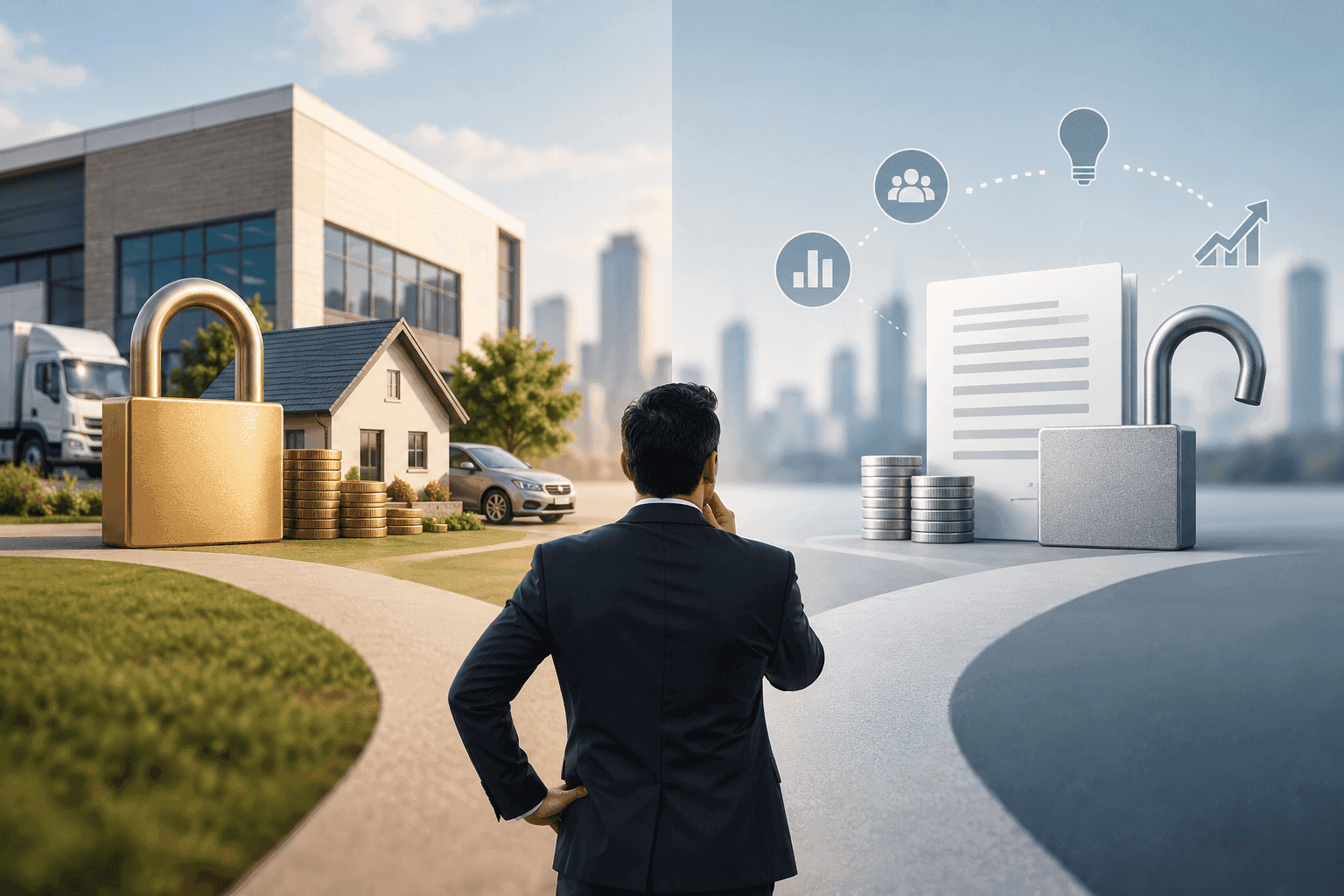
Choosing between a secured and an unsecured business loan comes down to four things: what the money is for, whether you have an asset you're willing to put up, how fast you need funds, and whether your cash flow can handle the repayments in a quiet month.
This guide explains how secured and unsecured business loans work in Australia, how they compare on cost, speed and risk, and which questions to answer before you apply.
For wider context on how businesses fund operations and growth, see our guide to business finance in Australia.
Important: Loan costs, eligibility criteria, and the consequences of default vary between lenders. Review the contract, fees, interest rate, and repayment schedule before accepting any offer. This article is general information, not financial or legal advice.
Quick answer: secured vs unsecured
- Secured loan: backed by an asset (property, vehicle, equipment, invoices or other business assets). It may offer lower rates, higher limits, and longer terms, but the lender can recover the debt from that asset if you default.
- Unsecured loan: no specific asset is pledged. Assessment leans revenue, trading history, and repayment capacity. It can be quicker and keeps your assets out of the arrangement, but may cost more and, depending on the contract, can include a personal guarantee.
Neither is automatically better. The right choice depends on the purpose of the funding, the asset you have available, and how much risk you're comfortable taking.
What is a secured business loan?
A secured business loan is backed by an asset or other form of security. Depending on the product and lender, that may include commercial property, vehicles, equipment, inventory, invoices or another acceptable business asset.
If the business defaults, the lender may have the rights to recover the outstanding amount through the secured asset. The exact rights and process depend on the loan agreement and applicable Australian law. Lenders commonly register their interest in business assets on the Personal Property Securities Register (PPSR), and some take a general security agreement over the business assets, so check exactly what is being secured before you sign.
For example, a business may use machinery as security when financing equipment, or property when seeking a larger amount over a longer term. Because the lender has an asset to rely on, secured loans may offer lower rates, higher borrowing limits or longer repayment terms than comparable unsecured options.
Secured funding may suit a business that:
- Needs a larger amount of funding.
- Is buying equipment, vehicles or property.
- Has an eligible asset and is comfortable using it as security.
- Can manage extra documentation, asset checks or a valuation.
The main risk is that the secured asset may be repossessed or sold if repayments aren't maintained.
What is an unsecured business loan?
An unsecured business loan doesn't require a specific asset as collateral. Instead, the lender usually assesses the wider business profile: revenue, trading history, bank activity, credit history, existing commitments, the purpose of the funding and repayment capacity.
Unsecured funding is commonly used for working capital, stock, wages, supplier invoices, marketing, repairs, equipment-related costs or a short-term cash-flow gap. It may also suit owners who don't want to use property or major equipment as security.
With no asset to value or register, unsecured applications can be simpler and faster in some cases. The trade-off is that rates may be higher, and eligibility requirements are stricter.
Unsecured doesn't mean risk-free. If repayments are missed, the lender may still pursue debt recovery and, where appropriate, court action. Many unsecured business loans also include a personal guarantee, which can expose a director or owner's personal assets. Read the guaranteed terms closely.
SimplyFunded provides unsecured SME funding from AUD $5,000 to $200,000 for eligible Australian businesses, subject to assessment. The funding may support working capital, stock, wages, supplier payments, equipment-related costs, and growth. See the unsecured business loans page for current product information and the application path.
Secured vs unsecured business loan: side-by-side comparison
The key difference is whether the loan is backed by a specific asset.
| Feature | Secured loan | Unsecured loan |
|---|---|---|
| Collateral | Usually required | Usually not required |
| Interest rate | May be lower than an unsecured option | May be higher because no specific asset is pledged |
| Borrowing amount | May be higher where the asset supports the request | May be lower, depending on revenue and affordability |
| Loan term | May be longer | Often shorter |
| Assessment | Business finances and the asset may be reviewed | Business finances, credit profile and repayment capacity are usually central |
| Default risk | The secured asset may be repossessed or sold | Debt recovery action may still occur; a personal guarantee may apply |
| Application process | May involve asset checks, documentation or a valuation | May involve fewer asset-related steps |
| Typical uses | Property, vehicles, equipment and larger purchases | Working capital, stock, wages, suppliers and flexible business costs |
The cheapest option isn't always the most suitable. A secured loan may have a lower rate but put an important asset at risk. An unsecured loan may cost more but let you keep property or equipment outside the security arrangement.
When a secured business loan may suit
A secured loan may be worth considering when you're buying a significant asset or need a larger amount over a longer period. Offering security may support the application, but the business should be comfortable with the consequences if trading conditions change.
Before choosing secured funding, consider:
- Whether the asset is genuinely available to offer as security.
- Whether a valuation, inspection, or extra documentation is required.
- Whether the repayments stay affordable during a slower trading period.
- Whether losing the asset would affect your ability to operate.
- The total cost, including interest, establishment fees, and ongoing charges.
Secured funding often makes sense for equipment, a commercial vehicle, a property project, or another clearly defined asset-backed need. It may be less suitable for smaller general working-capital needs or when you want to keep assets unencumbered.
When an unsecured business loan may suit
An unsecured business loan may be useful when you need working capital quickly, don't want to offer property or major assets as collateral, or have an expense that doesn't match one specific asset.
It may suit a business that:
- Needs funding for stock, wages, supplier invoices, or a cash-flow gap.
- Has enough revenue and trading history to support repayments.
- Wants to avoid using property or equipment as security.
- Can explain exactly what the money will pay for.
- Understands the total cost and any personal guaranteed requirements.
SimplyFunded's published requirements indicate eligibility may include at least six months of trading for sole traders and minimum monthly revenue of AUD $5,000. Requirements can change, so check the current business loan requirements before applying.
How to decide: a 5-question checklist
1. Do you have an asset to offer, and do you want to?
If you have an eligible asset and are comfortable using it as security, a secured loan may provide a lower rate or higher borrowing amount. If you don't have a suitable asset, or don't want to put one at risk, unsecured funding may be more practical.
2. How quickly do you need the money?
Secured applications can involve asset checks, valuations, and security documentation. Unsecured applications may move faster when the lender can assess the request from business and financial information. Timing still depends on complete information, verification, approval, and any final checks.
3. What is the total cost?
Don't compare interest rates alone. Review:
- Establishment fees.
- Ongoing account or administration fees.
- Broker fees, if applicable.
- Early repayment conditions.
- Default fees.
- The total amount repayable.
- How does the loan term affect total interest.
A lower advertised rate may not produce the lowest overall cost if fees are higher, or the term is longer. The business loan calculator can help you model a repayment scenario, but an estimate isn't a quote or approval.
4. Can your cash flow support the repayments?
Build a realistic repayment budget before choosing either option. Factor in seasonal revenue, tax obligations, payroll, supplier payments, rent and existing finance commitments. Test the repayment against a normal or slow month, not just your strongest one.
5. What happens if circumstances change?
Think through reduced income, slower sales, illness, unexpected expenses, or a shift in market conditions. With secured funding, an important asset may be at risk. With unsecured funding, the debt remains payable even though no specific asset is attached, and a personal guarantee may extend your exposure.
Documents lenders commonly ask for
Having these ready can speed up either type of application:
- Recent business bank statements.
- ABN and business structure details.
- BAS or financial statements, where requested.
- Details of existing loans and finance commitments.
- A clear explanation of the funding purpose.
- For secured loans: asset details, ownership evidence and, where required, a valuation.
Common mistakes to avoid
- Choosing a loan based only on the lowest advertised rate.
- Offering an important business asset as security without understanding the default consequences.
- Signing a personal guarantee without reading what it covers.
- Borrowing more than the business can comfortably repay.
- Comparing weekly repayments without checking the total repayment.
- Treating unsecured funding as if missed repayments have no consequences.
- Failing to disclose existing loans, tax pressure or recent account problems.
- Using short-term funding to cover an ongoing operating loss.
Frequently asked questions
Is a secured loan better than an unsecured loan?
Neither option is automatically better. A secured loan may suit a business that wants a potentially lower rate or larger amount and is comfortable offering an asset. An unsecured loan may suit a business that values flexibility and doesn't want a specific asset used as collateral.
Is an unsecured business loan more expensive?
It can be. Because the lender generally has no specific asset to recover after default, an unsecured loan may carry a higher rate or different eligibility requirements. Compare total cost, fees, repayment frequency and term rather than the rate alone.
Which is faster: a secured or unsecured business loan?
Unsecured loans can be faster in some cases because there's typically no valuation or security registration step. Actual timing depends on the lender; how complete your application is and verification checks.
Can an unsecured loan affect my assets?
An unsecured loan doesn't use a named asset collateral, but you're still responsible for repaying the debt. If you default, the lender may use debt collection processes and, where applicable, pursue legal recovery. A personal guarantee may also create additional exposure, depending on the contract.
Do unsecured business loans need a personal guarantee?
Many do, particularly small businesses and companies with a sole director, but it depends on the lender and the contract. Check the loan documents for a guarantee clause and understand what it covers before signing.
Can I get a business loan with bad credit?
Possibly, but options may be narrower and costs higher. Lenders look at the whole picture, including revenue, trading history, and repayment capacity, not credit history alone. Be upfront about any issues and compare total costs carefully.
Is a car loan secured or unsecured?
It can be either. A secured car loan uses the vehicle as collateral, while an unsecured car loan doesn't work. Secured car loans commonly have lower rates, but the vehicle may be repossessed if repayments aren't maintained. Review the product terms carefully.
Are SimplyFunded business loans secured or unsecured?
SimplyFunded promotes unsecured business funding for eligible Australian SMEs, including funding from AUD $5,000 to $200,000. Approval and loan terms depend on the business's circumstances, the application of information and lender assessment.
Choose funding that fits your business
The decision between a secured and unsecured loan should rest on more than speed or the advertised rate. Compare total cost, repayment structure, loan purpose, eligibility requirements and the consequences of default.
If your Australian business needs funding for working capital, stock, wages, supplier payments or growth, apply online with your business details and funding requirements for assessment. You can also review business loan comparison information before deciding which funding path fits.
This article is general information only and does not constitute financial or legal advice. Consider independent financial or legal advice before entering into a loan agreement.
Related Articles

How Hard Is It to Get a Business Loan in Australia?
Learn what Australian lenders look for, why business loan applications are declined and how to improve your chances of getting funded.

How to Compare Unsecured Business Loan Lenders in Australia
Learn how to compare unsecured business loan lenders by cost, eligibility, loan terms, documentation and repayment fit before you apply.
Do Business Loans Affect Your Credit in Australia?
A business loan may affect your personal or business credit depending on your business structure, the lender's checks and reporting, and any personal guarantee.
Ready to Grow Your Business?
Get fast business funding from SimplyFunded. Apply in minutes.
Apply Now